
Process Background
Copper foil is a critical conductive material used in lithium-ion batteries and printed circuit boards (PCBs).
In recent years, copper foil production has continuously evolved toward ultra-thin thickness, low surface roughness, and high ductility, placing increasingly stringent requirements on electrolyte cleanliness.
Electrolyte purification has become one of the most important factors affecting copper foil quality and production stability. Improving filtration accuracy and reducing contamination are essential to achieving consistent product performance.
Electrolyte Contaminants in Copper Foil Production
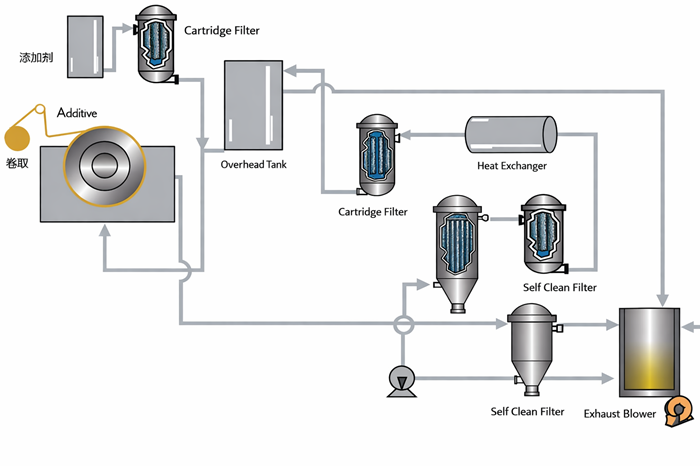
Typical Impurities
- Solid particles
- Oil and grease
- Gel-like and organic contaminants
Sources of Contamination
- Impurities introduced with raw materials
- Corrosion products from pipelines and process equipment
Impact on Copper Foil Quality
The presence of these contaminants may lead to surface defects, including:
- Pinholes
- Penetration points
- Surface pitting and roughness
These defects directly affect copper foil performance, yield, and downstream processing reliability.
Filtration Challenges in Electrolytic Copper Foil Processes
- Insufficient filtration accuracy
- Frequent replacement of filtration elements
- Complex operation and maintenance procedures
- Risk of secondary contamination caused by air exposure
A stable, high-efficiency filtration system is required to ensure continuous operation and consistent electrolyte quality.
Recommended Filtration Solutions
Automatic Backwashing Filtration – Primary Filtration
- Typical filtration rating: ~1 μm
- Function: removal of large quantities of solid particles
- Designed for continuous operation with minimal manual intervention
This stage serves as primary filtration to reduce particle load and protect downstream filtration equipment.
Oil-Absorbing Filter Bags – Safety Filtration
- Filtration rating: ~1 μm
Function:
- Removal of oil and grease introduced from raw materials or pumps
- Protection of heat exchangers from fouling
- Improvement of electrolyte cleanliness
Oil-absorbing filter bags are particularly effective in removing free and emulsified oils from electrolytes.
High-Flow Cartridge Filters – Fine Filtration
- Filtration rating: 0.5–1 μm
Function:
- Removal of fine particles introduced through pipelines
- Stabilization of electrolyte cleanliness
- Assurance of copper foil surface quality
High-flow cartridges provide high dirt-holding capacity and stable filtration performance.
Pleated Filter Bags – Primary and Process Filtration
- Filtration rating: 1–25 μm
Typical applications:
- Raw material filtration
- Surface treatment solution filtration
Pleated filter bags offer higher efficiency and longer service life compared to standard filter bags.
Flexible Filtration Configuration by Process Stage
Filtration systems can be customized according to specific process conditions at different production stages.
For example, in processes involving copper material carbonization or water rinsing, additional oil adsorption pads may be installed downstream of automatic backwashing filters to enhance oil removal.
In such cases, oil-absorbing filter bags can be replaced or supplemented with high-efficiency cartridge filters to achieve improved particle control and electrolyte stability.
Key Benefits of Proper Electrolyte Filtration
- Improved copper foil surface quality and consistency
- Reduced defect rates and higher production yield
- Extended service life of heat exchangers and process equipment
- Lower operating and maintenance costs
Products Overview
Explore our comprehensive range of industrial filtration products
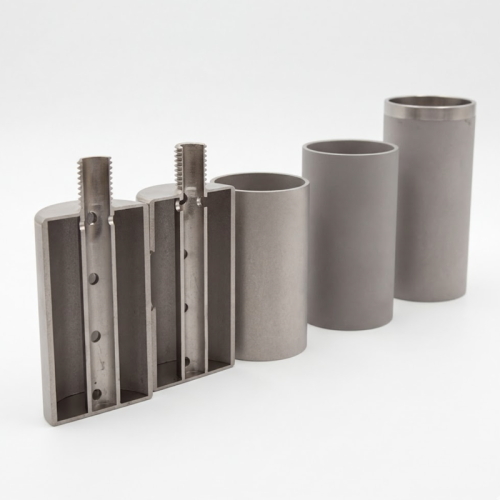
Asymmetric Sintered Metal Filter
Asymmetric Sintered Metal Filter Graded Porous Structure for High Efficiency…
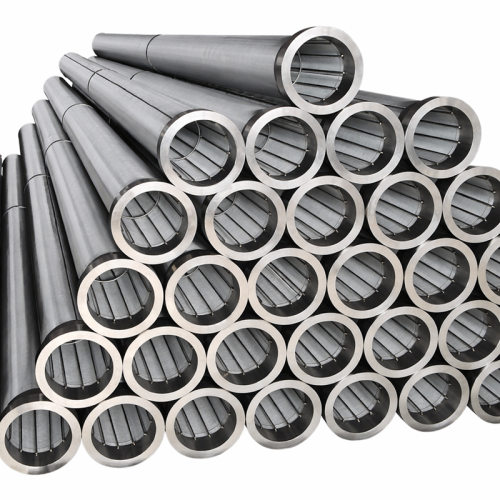
Metal Fiber Bag Filter
Metal Fiber Bag Filter High-Temperature Sintered Metal Filter Bags for…
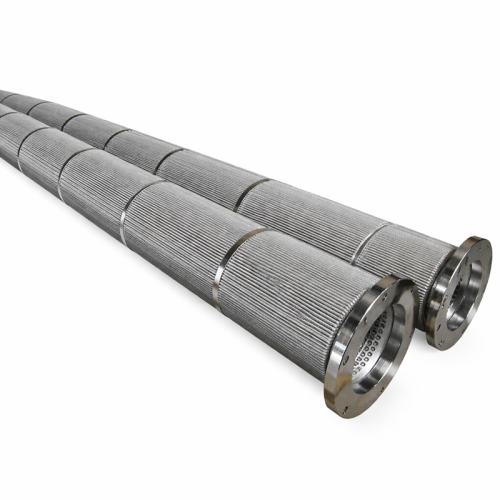
Sintered Metal Mesh Dust Filter
Sintered Metal Mesh Dust Filter High-Strength Metal Filter Element for…
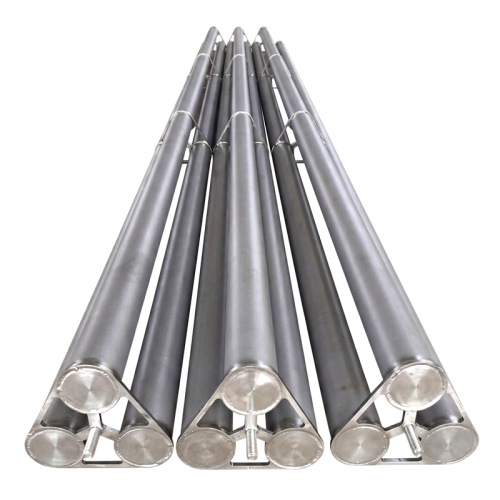
Multi-Tube Sintered Metal Filter Assembly
Multi-Tube Sintered Metal Filter Assembly High-Flow Sintered Filter Module for…