
Hydrogen peroxide is produced worldwide predominantly using the anthraquinone process. Internationally, fluidized-bed hydrogenation has been widely adopted, while in China, fixed-bed hydrogenation has historically been the dominant technology. In recent years, newly built hydrogen peroxide plants in China have increasingly adopted fluidized-bed process technology.
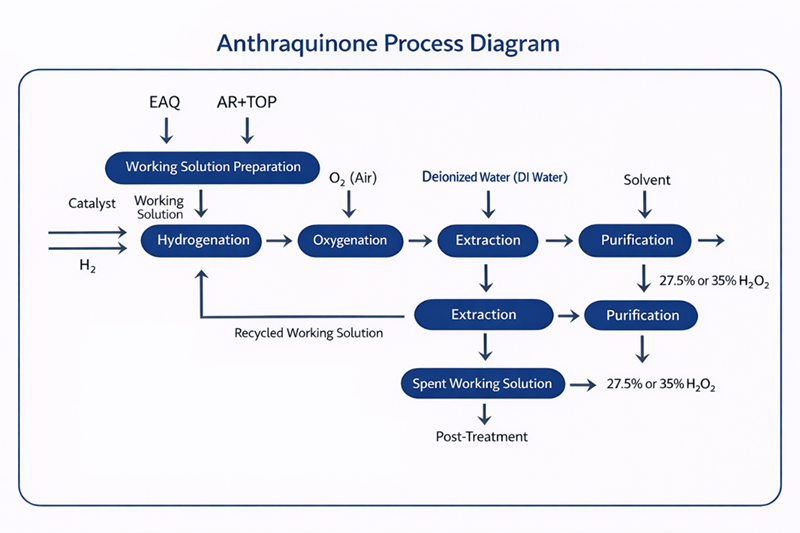
The anthraquinone process typically consists of four main stages:
- Hydrogenation
- Oxidation
- Extraction
- Post-treatment
Throughout the production process, filtration plays a critical role, particularly in:
- Hydrogenation liquor filtration, which is directly related to process safety
- Post-treatment circulating working solution filtration, which has a direct impact on catalyst lifetime and long-term plant stability
Filtration Challenges in Hydrogen Peroxide Production
Hydrogen peroxide production presents several unique filtration challenges:
- Presence of fine palladium catalyst particles
- High safety requirements due to peroxide decomposition risk
- Continuous operation with strict tolerance for catalyst loss
- Complex separation requirements involving solid–liquid, gas–solid, gas–liquid, and liquid–liquid systems
Inadequate filtration may lead to:
- Catalyst loss and shortened catalyst life
- Downstream contamination
- Unstable operation
- Increased safety risks
Filtration Solutions for Different Process Technologies
Fluidized-Bed Hydrogenation Process
Compared with fixed-bed systems, fluidized-bed hydrogenation offers:
- Higher hydrogen utilization efficiency
- Higher single-unit production capacity
- Improved operational safety
As a result, fluidized-bed technology is becoming the preferred development direction in the hydrogen peroxide industry.
Catalyst Primary Filtration
In fluidized-bed systems, automatic backwashing filtration systems are applied for first-stage catalyst separation.
Key characteristics:
- Filtration units arranged radially around the fluidized-bed reactor
- Multiple units operating in parallel to ensure continuous, stable production
- Use of metal filter elements to allow repeated regeneration and reuse
This configuration ensures effective catalyst retention while maintaining uninterrupted process operation.
Secondary and Tertiary (Safety) Filtration
Downstream safety filtration typically employs:
- High-flow filter bags
- High-flow cartridge filters
These stages provide additional protection for downstream processes and equipment.
Fixed-Bed Hydrogenation Process
In fixed-bed hydrogenation reactors, the catalyst remains stationary. The working solution and hydrogen flow downward through the catalyst bed, and the hydrogenated liquor exits from the reactor bottom.
Filtration in this process focuses on:
- Capturing small amounts of abraded or broken palladium catalyst particles
- Preventing catalyst migration to downstream processes
- Avoiding peroxide decomposition and associated safety risks
Typically, two-stage filtration with different filtration ratings is applied to ensure effective catalyst retention.
Filtration Methods in the Anthraquinone Process
Across hydrogen peroxide production processes, filtration and separation may involve multiple mechanisms, including:
- Solid–liquid separation
- Gas–solid and gas–liquid separation
- Liquid–liquid separation
Common filtration and separation technologies include:
- Bag filter housings (frequently used in older installations)
- Cartridge filter systems
- Coalescers and phase separation equipment
Selection depends on process stage, contamination characteristics, and safety requirements.
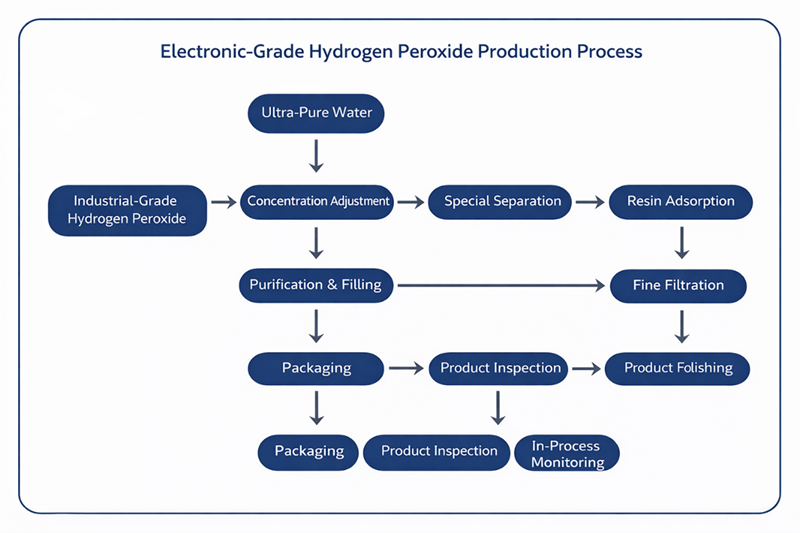
Electronic-Grade Hydrogen Peroxide Filtration
After further purification of industrial-grade hydrogen peroxide, electronic-grade hydrogen peroxide is produced for use in the semiconductor and advanced electronics industries.
Typical applications include:
- Semiconductor wafer cleaning
- Etching processes
- Photoresist removal
- High-purity insulation layer production
- Removal of inorganic impurities in electroplating solutions
- Processing of copper, copper alloys, gallium, and germanium
- Etching and cleaning of photovoltaic silicon wafers
Electronic-grade hydrogen peroxide belongs to the category of wet electronic chemicals, which present extremely high technical barriers.
Purity Requirements and Filtration Role
If purity requirements are not met:
- Semiconductor product defects may occur, severely affecting yield and performance
- Process equipment may be contaminated
High-end wet electronic chemicals often require purity levels at the ppt (parts-per-trillion) level.
By applying advanced filtration, separation, and purification technologies, online high-efficiency purification can be achieved, effectively reducing contamination risks during:
- Filling
- Storage
- Transportation
This helps lower defect rates and improve overall production efficiency.
Engineering Value of Filtration in H₂O₂ Production
- Stable and safe hydrogenation operation
- Reliable catalyst recovery and protection
- Reduced catalyst loss and extended service life
- Improved process stability
- Compliance with high-purity product requirements
Products Overview
Explore our comprehensive range of industrial filtration products
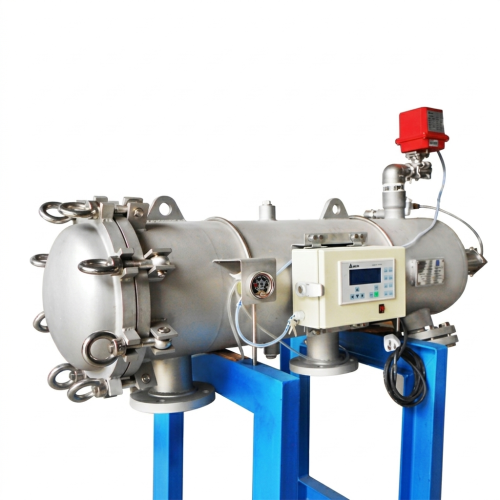
Self Cleaning Filter
Self Cleaning Filter – USCF Series Automatic Backwash Filter for…
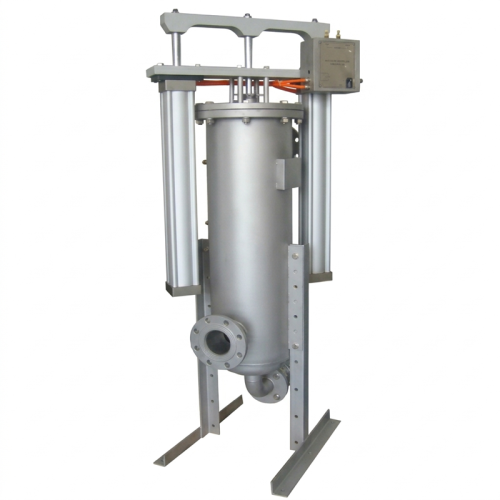
Automatic Self Scrape Filter
Automatic Self-Scraping Filter (UMCF Series) High-Viscosity & High-Dirt Load Filtration…
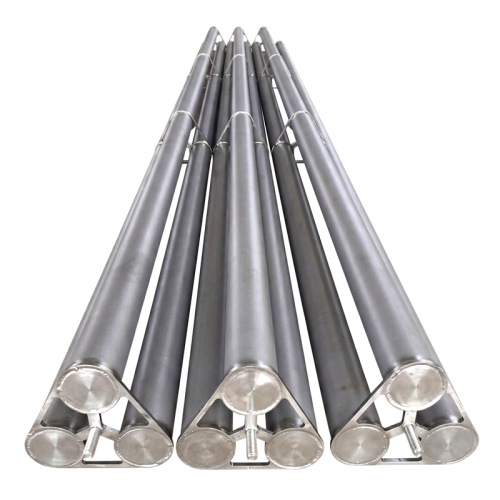
Multi-Tube Sintered Metal Filter Assembly
Multi-Tube Sintered Metal Filter Assembly High-Flow Sintered Filter Module for…
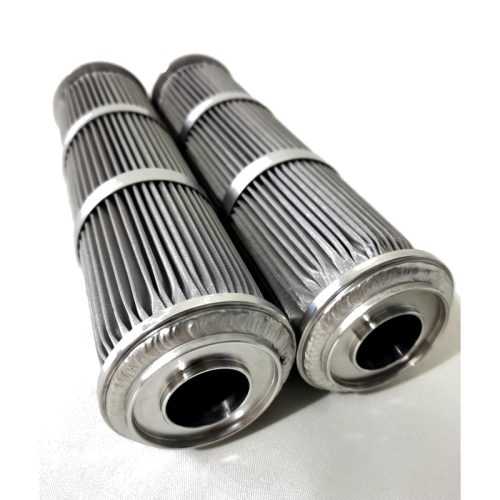
Sintered Metal Fiber Filter
Sintered Metal Fiber Filter High-Porosity Filtration Media for High Flow…